
'You'd Do It for Randolph Scott' Reflects Ranown Cycle
Actor Randolph Scott and director Budd Boetticher collaborated on seven popular Old West films made during the 1950’s and through the early 1960’s, a group partially known as the Ranown Cycle
These films, embodied by their lead actor, received the ultimate compliment in 1974 as the catchphrase of a joke written by Mel Brooks for his classic comedy western “Blazing Saddles.” At its briefest, the tag “You’d do it for Randolph Scott” (you have to watch it to understand it) becomes synonymous with finding the inspiration and the courage to do what’s right.
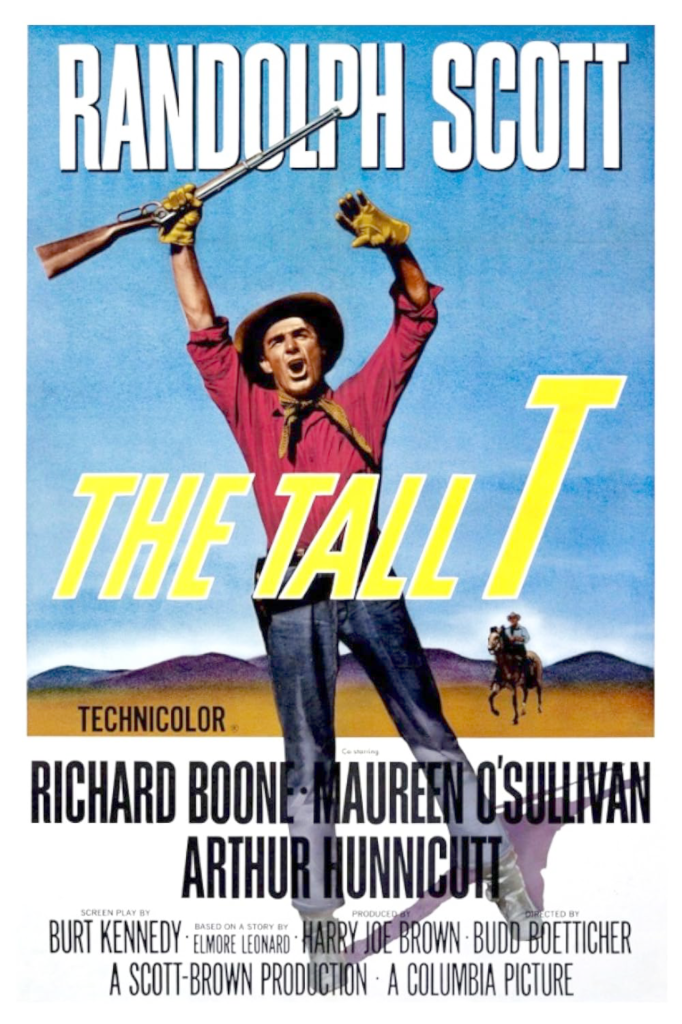
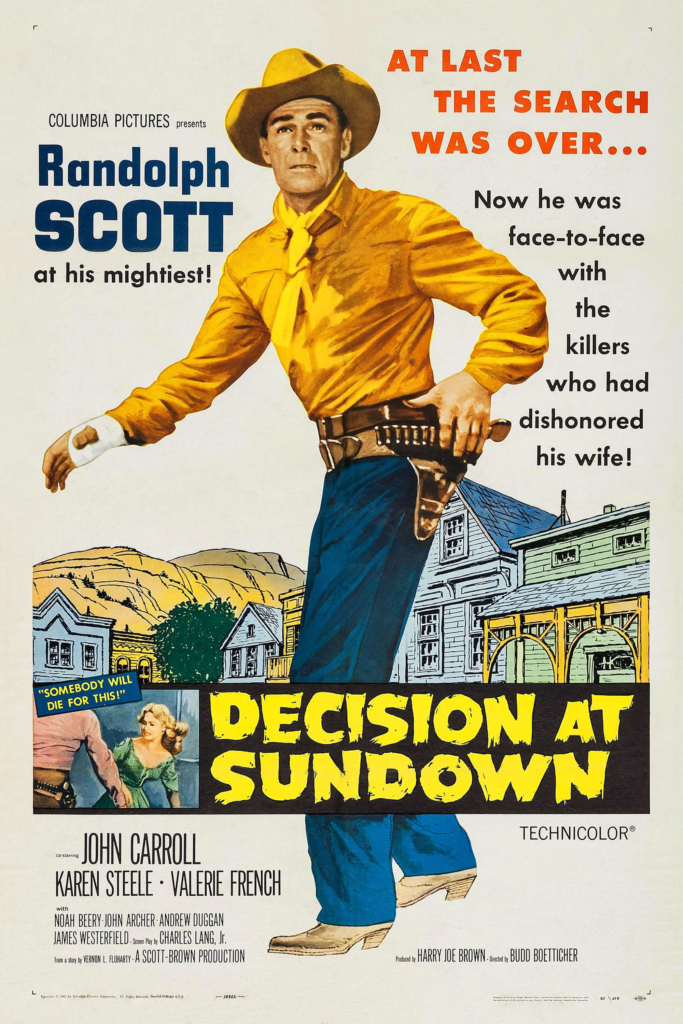
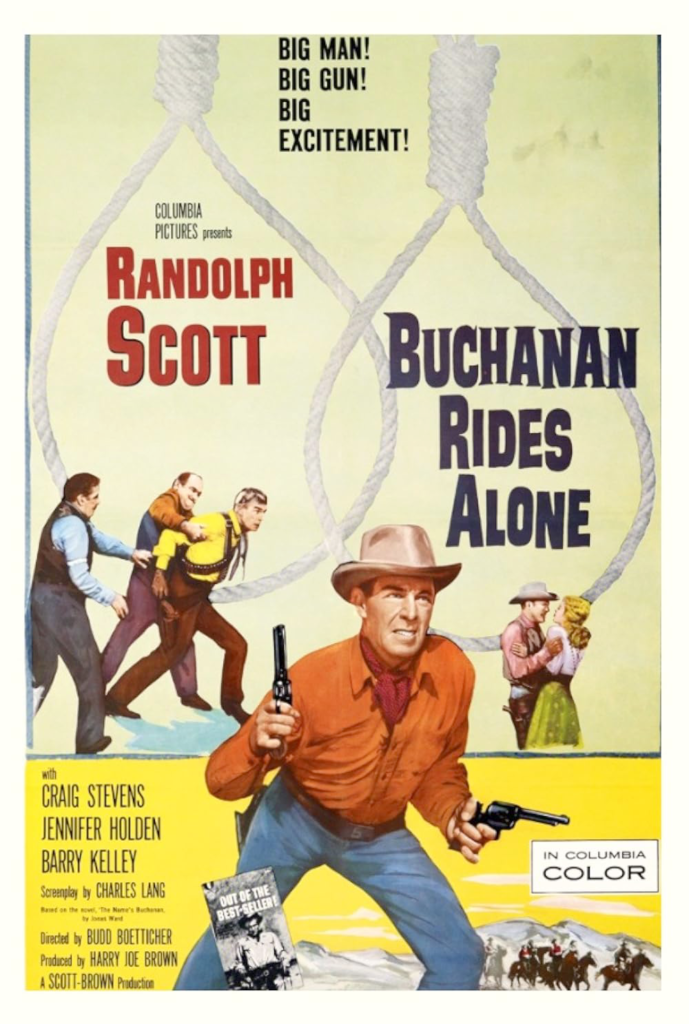
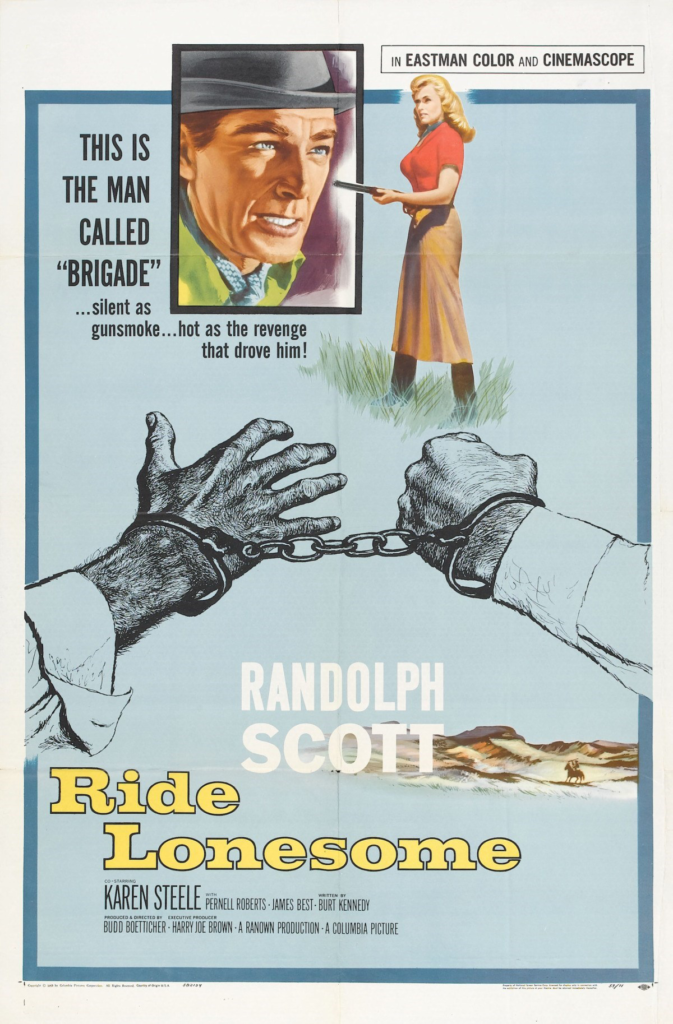
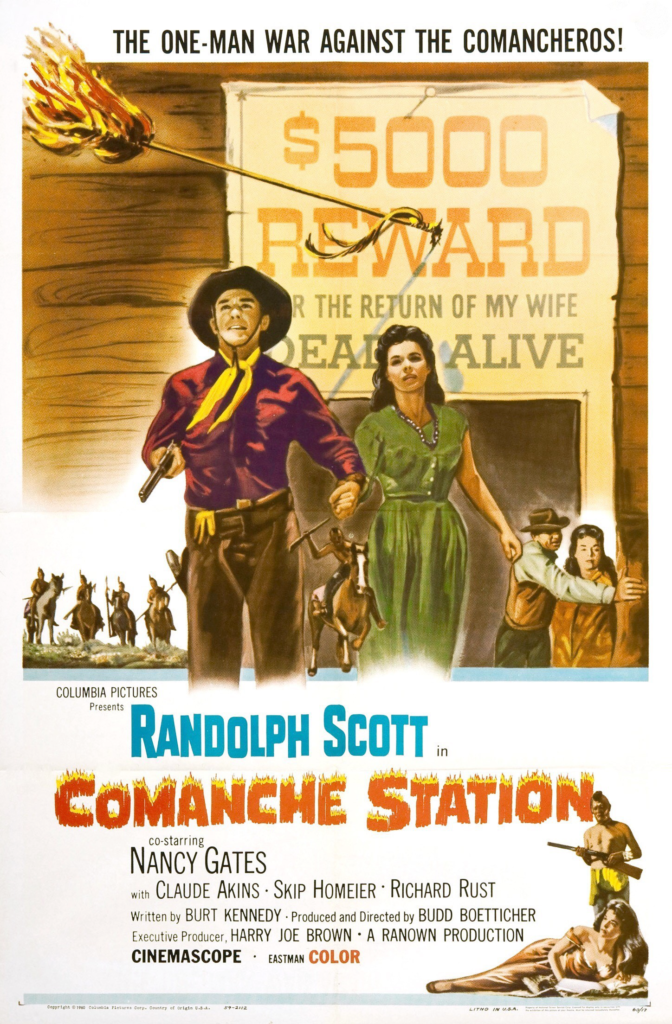
Film scholars include only five titles from the seven as the Ranown Cycle since these five were financed by a partnership comprised of Scott and producer Harry Joe Brown–their first/last names were joined to create ’Ranown.’ The first official film in the Ranown Cycle is The Tall T (1956), followed by Decision at Sundown (1957); Buchanan Rides Alone (1958); Ride Lonesome (1959); and Comanche Station (1960).
The other two were released during the same period, but under different production companies. These two are ‘7 Men from Now’ (1956); and ‘Westbound’ (1958).
The movies are all very similar. They are taunt – rarely exceeding 120 minutes in running time – and follow a familiar formula. A lone protagonist performs a task. He acts according to his own standards and his motives are not always clear. He is honorable, brave, and, in the end always alone. Women are part of the plot’s elements, but they are usually victims. The storylines use this victimhood to profile the men’s actions, and the crux of each story is how the bad guys are not always completely bad. In fact, they are occasionally charming and always interesting. It is hinted also that the good guy – centered around Scott’s character – is not completely good.
An obvious comparison is the later released Spaghetti Westerns of the 1960s-70s associated with Sergio Leone and his ‘man with no name cycle’. These starred Clint Eastwood with villain backup from such notables as Lee Van Cleef and Eli Wallach.
While Scott is the center of each film, his co-stars included formidable opposition: Richard Boone, Pernell Roberts, James Coburn, Claude Akins, Lee Van Cleef (double duty), Craig Stevens, James Best, Henry Silva, and Lee Marvin, arguably the best of the ‘bad’. He missed the Renown Cycle by appearing in 7 Men from Now (1956).
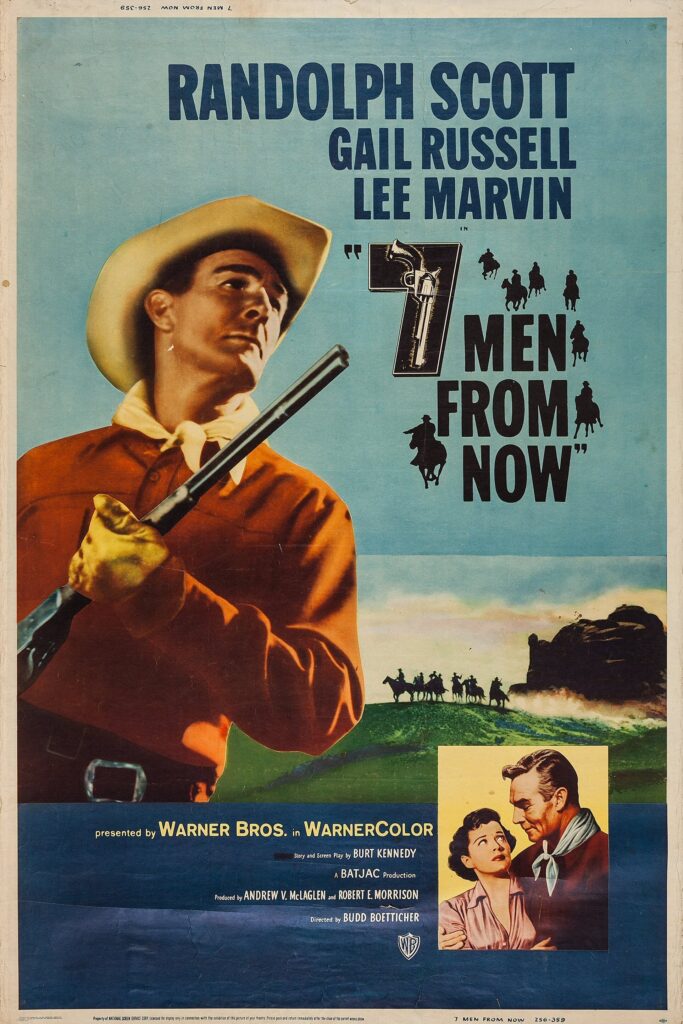
This film was based on a novel by author and script writer Elmore Leonard that caught the attention of another film cowboy, John Wayne. The story goes that Wayne was going to star in the film under his own production company, Batjac. Instead, Wayne starred in John Ford’s The Searchers in 1956, and Randolph Scott starred in 7 Men from Now, directed by Boetticher and produced by Wayne’s company.
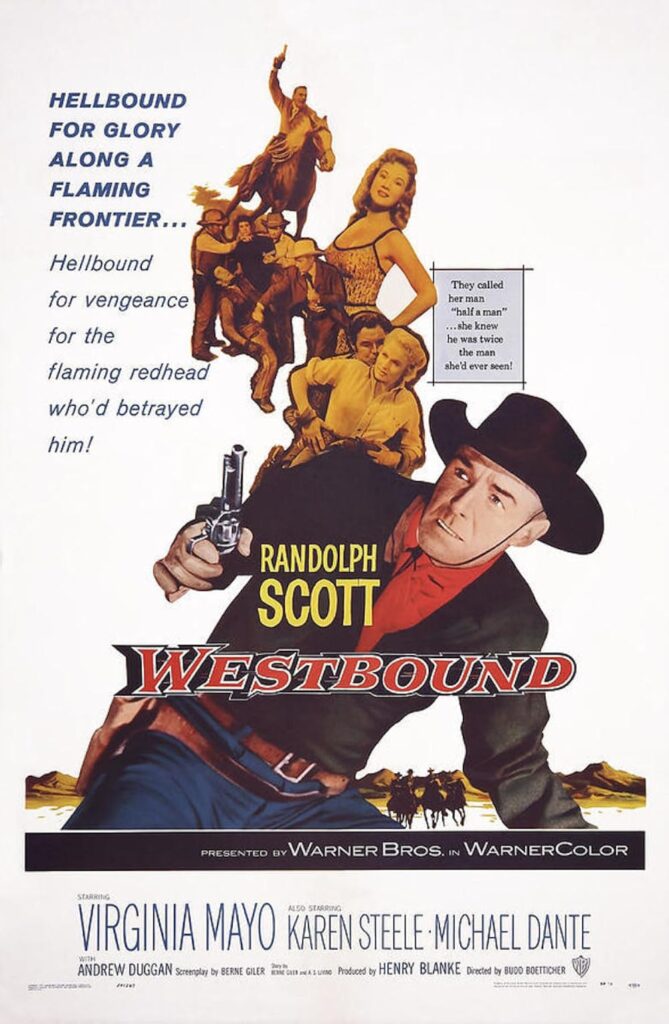
For the record, the seventh western from Scott/Boetticher was entitled Westbound, released in 1959. The producer was Henry Blanke, a German native with a successful and long list of well received movies including The Fountainhead (1949) and The Treasure of the Sierra Madre (1948).
These films have been included in the Criterion Collection, described as “a continuing series of important classic and contemporary films (released) on home video.”
Terrance Rafferty wrote an insightful article about all of the Boetticher/Scott westerns as part of the Criterion Collection website.
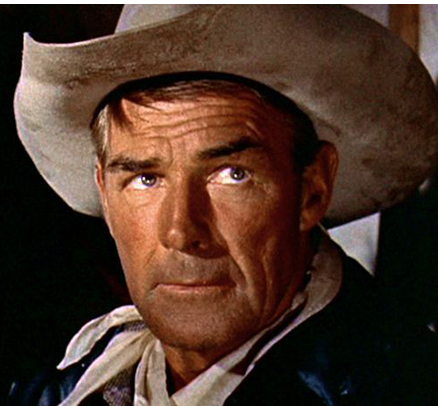
Randolph Scott (1900-1987) is one of Hollywood’s most popular Western stars. Raised in Charlotte, North Carolina, he served with the US Army in World War I and attended Georgia Institute of Technology (where he played football) and later the University of North Carolina, where he earned his degree. He re-located to California in the late 1920s and was a contract player for Paramount, meeting fellow actor Cary Grant in 1932. The pair became roommates (rumor but not facts hint a love interest) for the next 10 years. Scott married and divorced wealthy heiress Marion DuPont in the late 1930’s. He began focusing on Westerns in the late 1940s, becoming one of the top box office stars of the 1950s thanks to Westerns he made with director Budd Boetticher. Scott retired from films after making the classic Ride the High Country (1962), directed by Sam Peckinpah. At the time he was a multimillionaire thanks to successful business investments. He spent his final years in North Carolina, mostly avoiding the film industry entirely. He died in 1987, survived by his second wife, Patricia Stillman, and two adopted children.
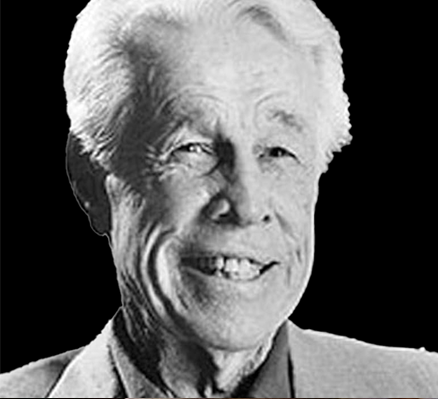
Budd Boetticher (1916-2001) directed more than 40 Hollywood films. Born in Chicago, he attended Culver Military Academy and Ohio State University. After college he traveled to Mexico, briefly transforming himself into a professional matador. This training served him later as a technical adviser on the bullfighting romance Blood and Sand (1941). He was an assistant director for many years before his first feature, directing a fictionalization of his own experiences in Mexico, Bullfighter and the Lady (1951). Boetticher formed a partnership with actor Randolph Scott which led to some of the most memorable Western films of the 1950s. He directed also the gangster movie, The Rise and Fall of Legs Diamond (1960). He spent seven years in Mexico filming a monumental documentary on famed matador Carlos Arruza. Boetticher detailed these experiences in his autobiography “When In Disgrace,” including a near-fatal illness, divorce, incarceration in jails, hospitals and an insane asylum, and the accidental deaths of Arruza and most of the film crew. The documentary, Arruza was released in 1971. Boetticher died at age 85.